
Tending to Food Systems: An Interview with Jenny Schwartz
8 Minute Read
*With the help of Jenny Schwartz, After Hours has collaborated with Berkshire Bounty on four food access projects: Buy One Give One, Thanksgiving meal boxes (Nov. 2024), Thanksgiving pies distribution in collaboration with Railroad Street Youth Project and Northroots Catering (Nov. 2025 and 2026), After Hours Supper Club proceed donation (June 2025).
“It was becoming increasingly clear that people wanted and needed fresh food over shelf-stable.” - Jenny Schwartz
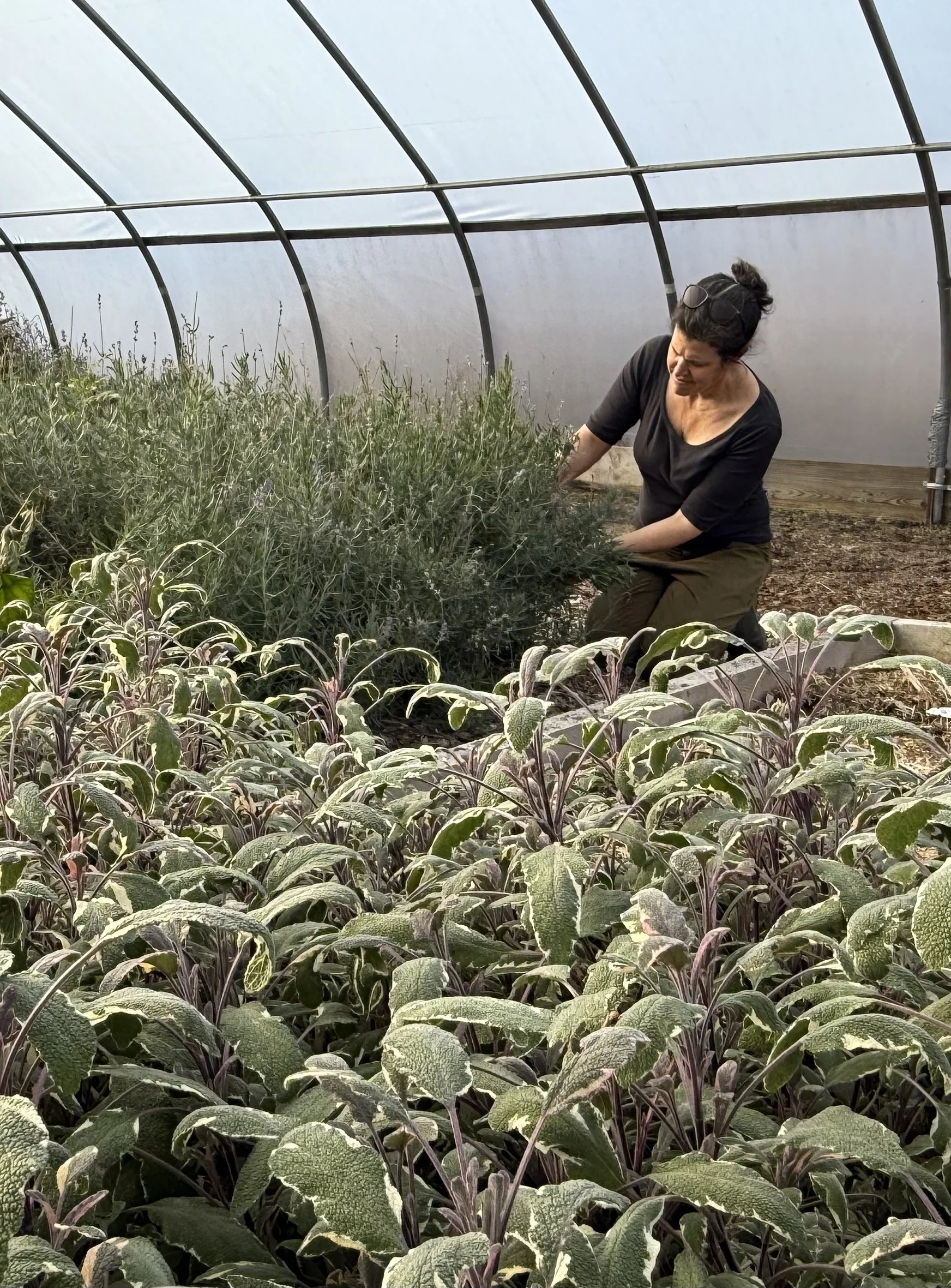
Photo provided by Jenny Schwartz
Jenny Schwartz spends a lot of her time solving practical problems: coordinating volunteers, tracking deliveries, answering emails, moving food from one place to another. Her work requires efficiency, precision and focus.
But beneath the logistics is a different kind of thinking.
“I like to think I’m an out-of-the-box thinker,” Schwartz said. “I think it’s a good skill to know where the boundary is and how to get creative within the boundary.”
Schwartz is the Operations Manager and Volunteer Coordinator at Berkshire Bounty, a nonprofit working to expand food access across Berkshire County through food rescue, purchasing, local farm partnerships, and community collaborations. She also serves as the food access coordinator for the Southern Berkshire Rural Health Network and Fairview Hospital, manages open hours at the People’s Pantry in Great Barrington, and has spent years offering community-based cooking education focused on local, seasonal food.
But titles only gesture toward the shape of her work. What she actually does is listen, adapt and tend to systems — human and logistical — with great care. Her work requires an ability to act quickly but carefully, meeting urgent needs while trying to reshape the systems that make those needs so persistent.
“What we quickly realized during COVID,” she said, “was there were no systems in place to pick up, hold and distribute food. Food was coming in every which direction, and people wanted to give. It really highlighted the work we needed to do.”
The crisis didn’t create food insecurity; it simply exposed how fragile and fragmented the existing systems were. Berkshire Bounty became a kind of connective tissue, coordinating volunteers, retailers, farms, schools, senior centers, and pantries. Today, the organization works with more than 100 active volunteers, rescues food from 25 retailers, and delivers to 32 emergency food sites across the county.
Still, Schwartz is clear-eyed about the limits of food rescue alone.
“Food rescue can save food,” she said, “but justice asks deeper questions.”
Those deeper questions — about power, dignity, and self-determination — are what drive her work.
Schwartz grew up in Akron, Ohio. “I’ve just lived one of those lives where I followed interesting jobs that I’ve been lucky enough to receive,” she said. She studied art as an undergraduate and later pursued graduate work in art therapy. “Food is a kind of modality,” she said. “There’s a lot of humanism that plays a role, and so I don’t dismiss my education. I think creative thinkers are needed in this work.”
Her path to the Berkshires wasn’t linear. She moved to New York City but the city didn’t feel like the right fit. She began spending time in the Berkshires with family. “I kind of felt like my best self here,” she said. She took a job at the Berkshire Food Co-op, and never left.
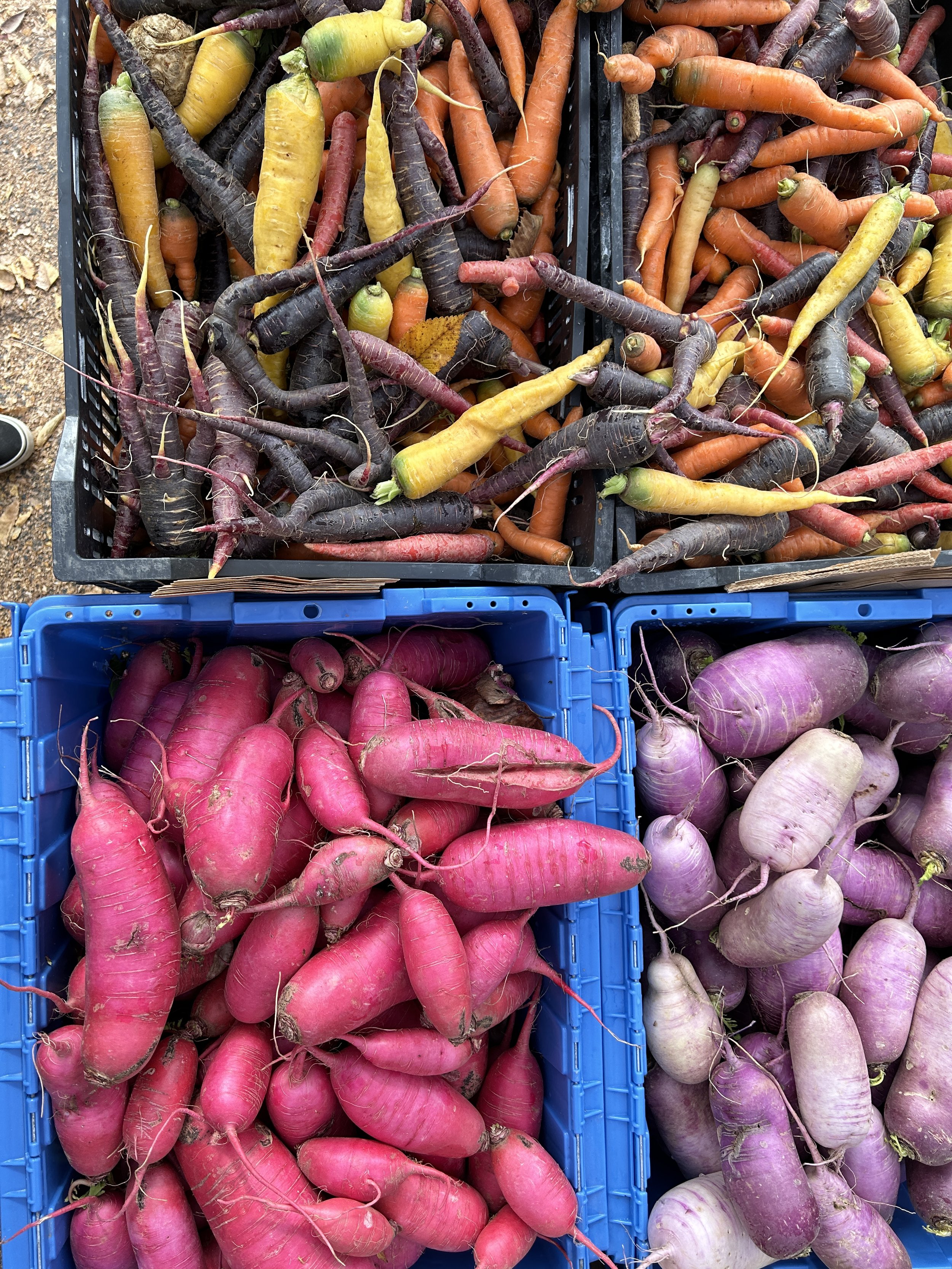
What first drew her to food systems work, she said, was people. “My attraction to getting into this work was about the people in the Berkshires.
When I learned about the job at the co-op and how it was connected to farmers, I was just really excited to be a part of it.”
She started a grant-funded role at Fairview Hospital in December 2019, focused on getting food to families with school-aged children when school wasn’t in session. Then COVID hit.
“All of a sudden, it was the work that I was living and breathing,” she said. “Within two months, two other food access sites hired me to help with various aspects of their organizations.”
She jumped in, propelled by relationships she had already built. “I think my connections in the community were the motivating reasons why I was asked to do this,” she said.
In those early pandemic days, Schwartz helped convene a Zoom call with more than 25 organizations — schools, pantries, nonprofits, health systems — all trying to respond to a rapidly unfolding emergency. “There was so much panic,” she said. “We had 25 different organizations going to the schools to find out what they needed. And just by helping define what the need was, it helped us quickly put a system in place, which we’re using to this day.”
One of those systems began with a simple question from a local grocery store.
“I can’t say enough good things about Guido’s,” Schwartz said of the grocery store on South Main Street in Great Barrington. “They approached food access before anyone had a chance to approach them and said, ‘What can we do?’”
What communities were asking for most was fresh food. Since March 2020, Berkshire Bounty has coordinated a weekly produce order through Guido’s that allows seven sites to request what they need. The food is picked up with the store’s regular deliveries, transferred to a cooler owned by Berkshire Grown on North Plain Road, and then distributed throughout the week by volunteers.
That system marked a turning point.
“It was becoming increasingly clear that people wanted and needed fresh food over shelf-stable,” Schwartz said. That gap is part of what led Berkshire Bounty to expand beyond food rescue into food purchasing — buying eggs, dairy, meat, and produce to supplement donations. In collaboration with Berkshire Grown, the organization now purchases storage crops directly from local farmers, paying them in advance so they can plan their seasons with more stability.
“It’s not a perfect system,” Schwartz said. “But we’re always working to make it better.”
This blend of pragmatism and possibility is central to Berkshire Bounty’s values: dignity, responsiveness, authenticity, collaboration. Schwartz embodies those values not as abstract principles, but as daily practices.
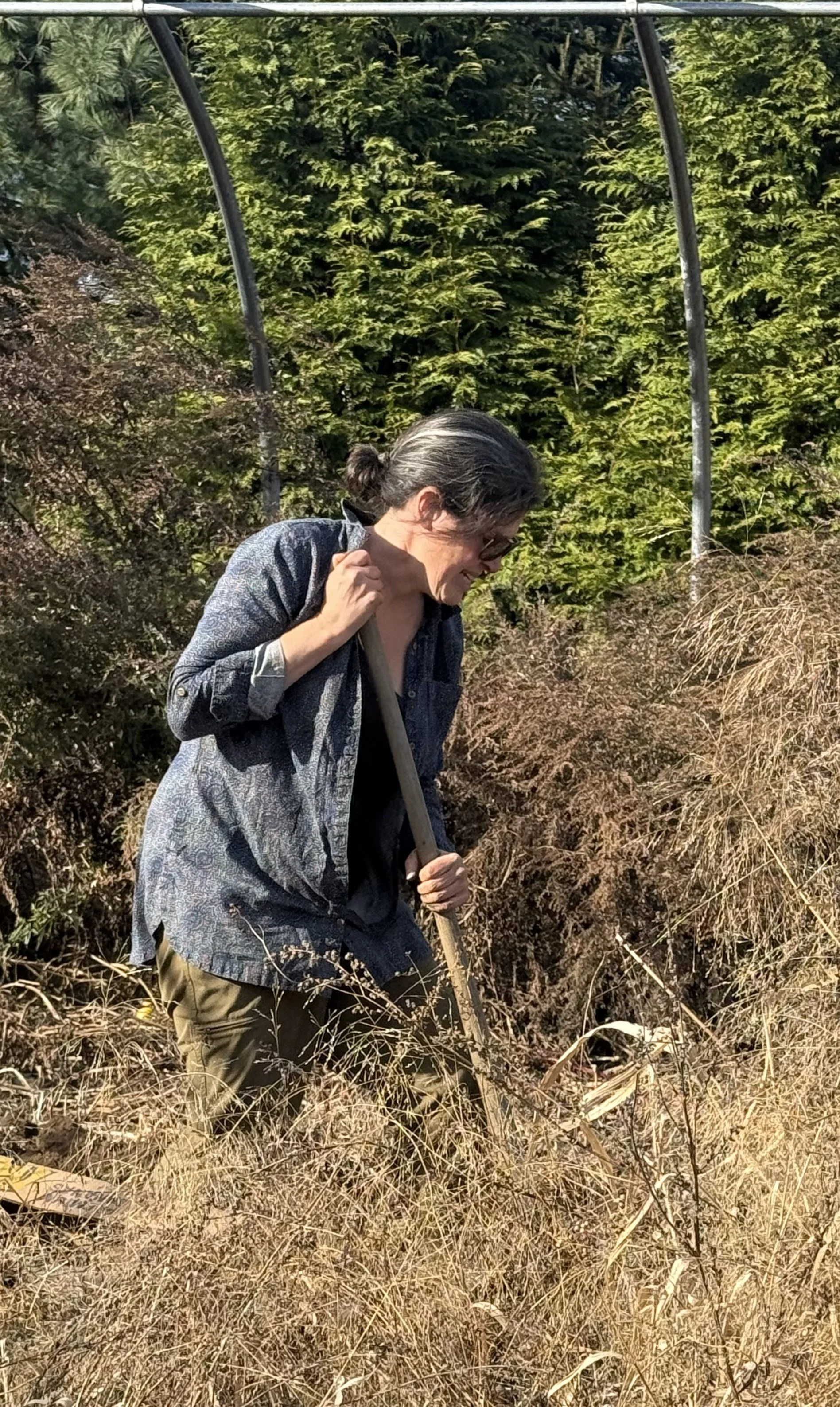
Photo provided by Jenny Schwartz
When she talks about culturally appropriate food, she’s careful not to center her own assumptions. “We’re fortunate to have organizations at the table whose primary goal is to support families in the BIPOC community,” she said. “We don’t want anyone guessing. We’re taking their lead.”
She’s also thinking about how food can be a doorway into deeper community connection. This year, she’s collaborating with Seeing Rainbows in Pittsfield on a Pay What You Can community supper — an informal space for people from different backgrounds to share a meal and conversation.
“While we’re working on more formal ways we organize community, that’s a small, creative way we can start,” she said. “Let’s see who comes.”
Her attention to dignity is rooted in lived observation. When she briefly managed the People’s Pantry, she was struck by the contrast between her own ease of access and what she witnessed there.
“I’ve never needed to stand in a food pantry line in my life,” she said. “I can walk into a grocery store within its hours, and those hours cater to me. Meanwhile, people were standing in line for sometimes hours to get what they need.”
She paused.
“And it’s no fault of the pantries — they’re volunteer-based. But how, in some ways, have we normalized this as being okay?”
She’s interested in models like community fridges, which decentralize access and reduce barriers. While Berkshire County doesn’t yet have them, she sees their potential. “They could take a lot of logistics out of the game,” she said. “Build more trust.”
Schwartz’s relationship to food is personal as well as political. “On my mother’s side, food is love,” she said. She remembers holidays as gatherings centered on abundance and care. Raised Reform Jewish, she grew up with Shabbat dinners and ritual meals marking the calendar — Rosh Hashanah, Passover, Hanukkah. “Even though my connection to Judaism is light now, the food aspect remains,” she said. “Making time for special meals is how I stay connected.”
Burnout is a real risk in this work. Schwartz practices meditation at the Dharma Center in Claverack. “It’s really helped a lot,” she said. “It doesn’t cost much money, and it’s something I can do at home.”
And then there’s cooking.
“Prepping food for me is therapy,” she said. “Making dinner, sharing it with my partner. That ritual helps me decompress.”
These practices buoy Schwartz for the often-challenging work of food access. But she’s also aware she doesn’t have to have all the answers. “It’s not me that needs to come up with them,” she said. “It’s really bringing people who are beneficiaries into the conversation — hearing what they think, what they want, what the system should be.”
In the meantime, she keeps solving practical problems. She keeps asking deeper questions — listening, adjusting and showing up.
*To stay up to date with everything happening at After Hours, subscribe to our newsletter, follow us on Instagram, and like our page on Facebook!

Paid sponsorship contribution from Mahaiwe Tent.